

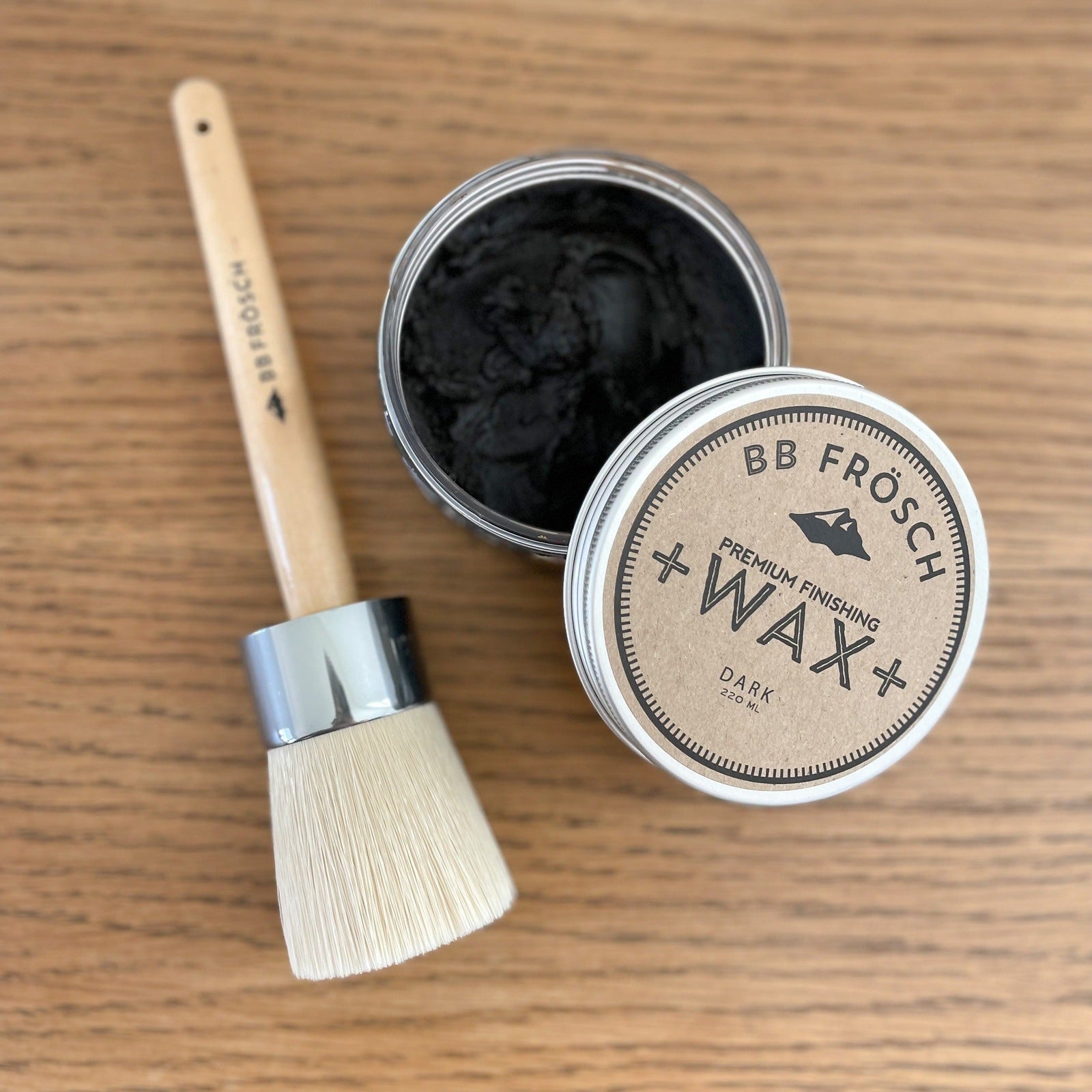
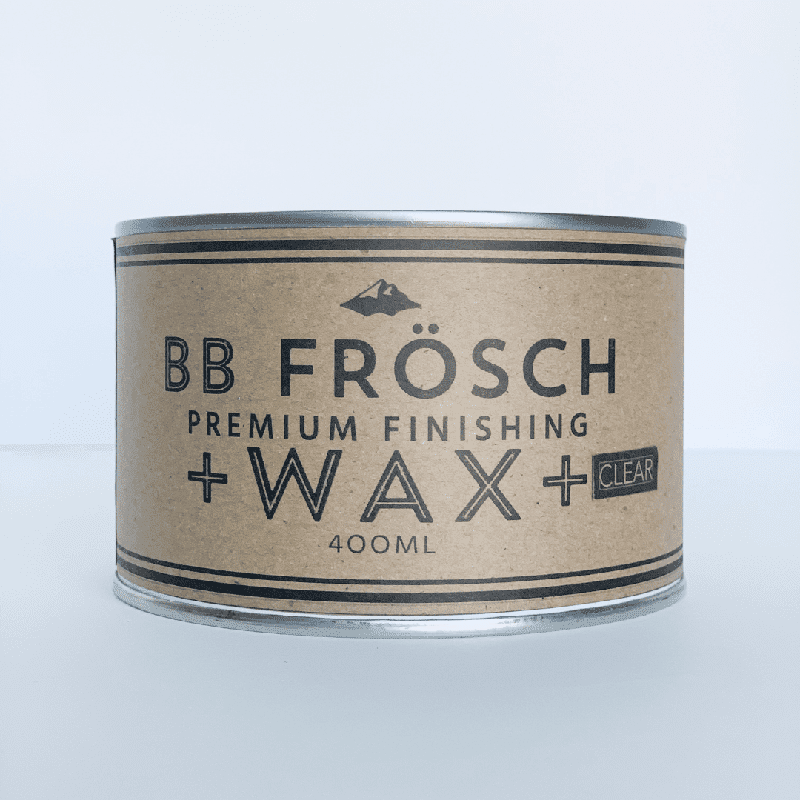
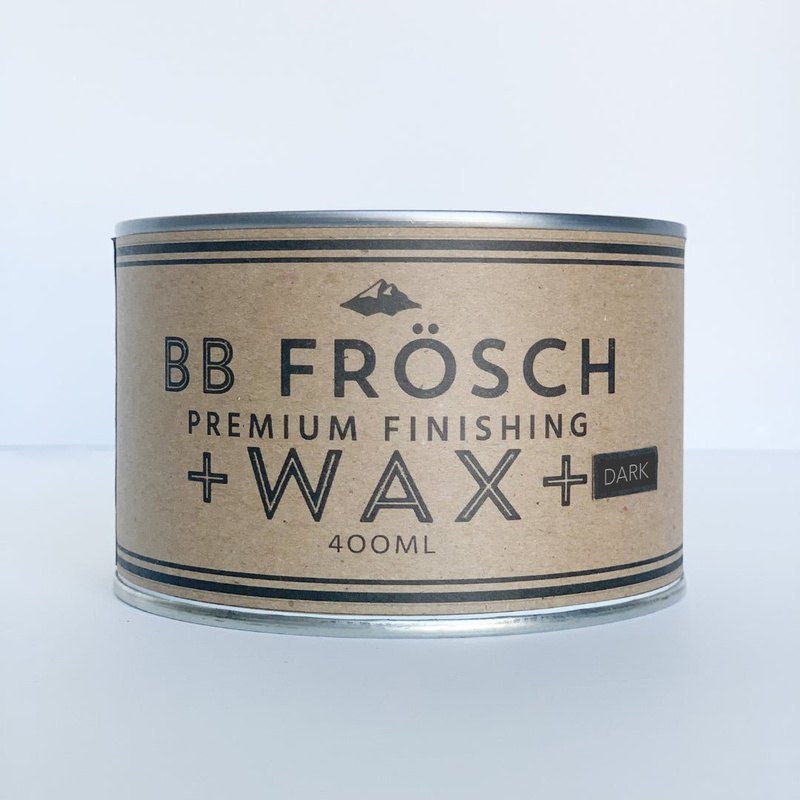
Premium Finishing Wax
The last step, and the one that makes it yours.
Wax does two jobs at once. Protects your painted piece so it can actually be used, not just admired. It also changes how the surface feels. Soft, smooth, and buttery, with none of the plastic feel a topcoat leaves behind.
A little goes a long way. Most people are surprised how far one jar gets them.
Clear or Dark?
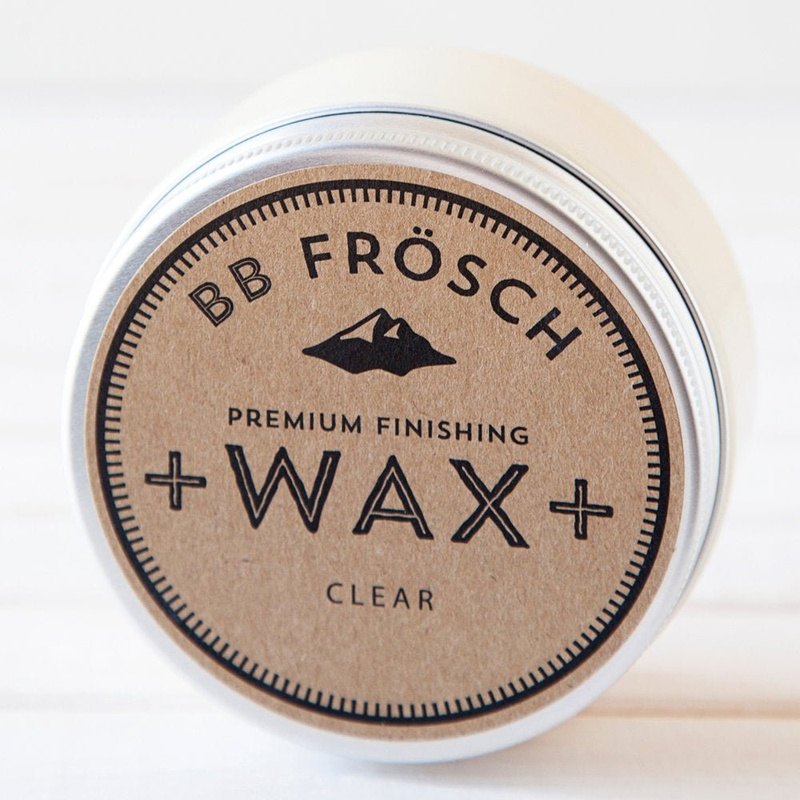
Clear is the one most projects need. It seals and protects painted furniture, bare wood, and stained wood without changing the color you chose.
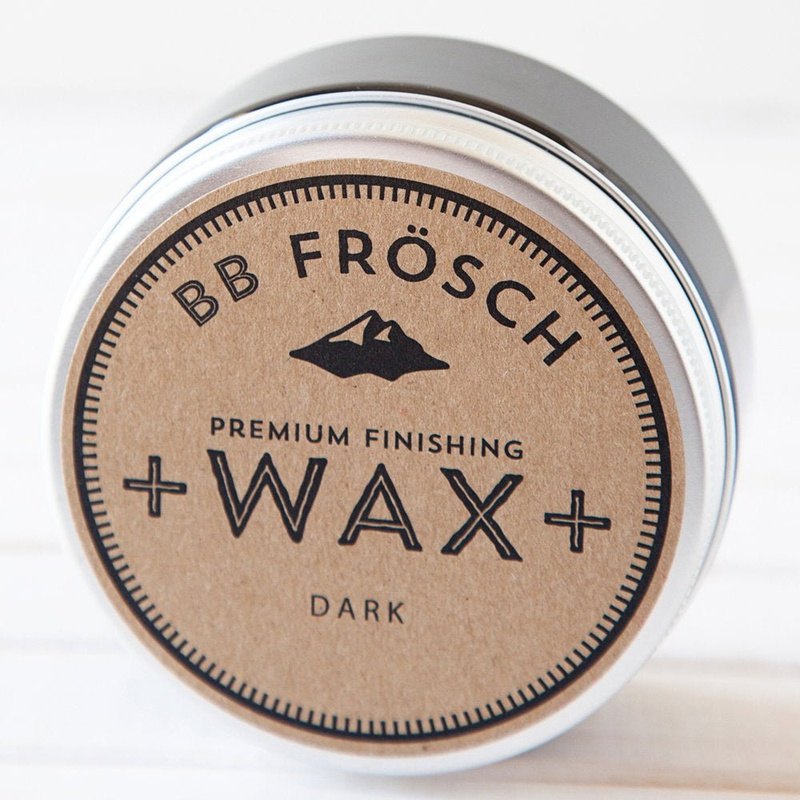
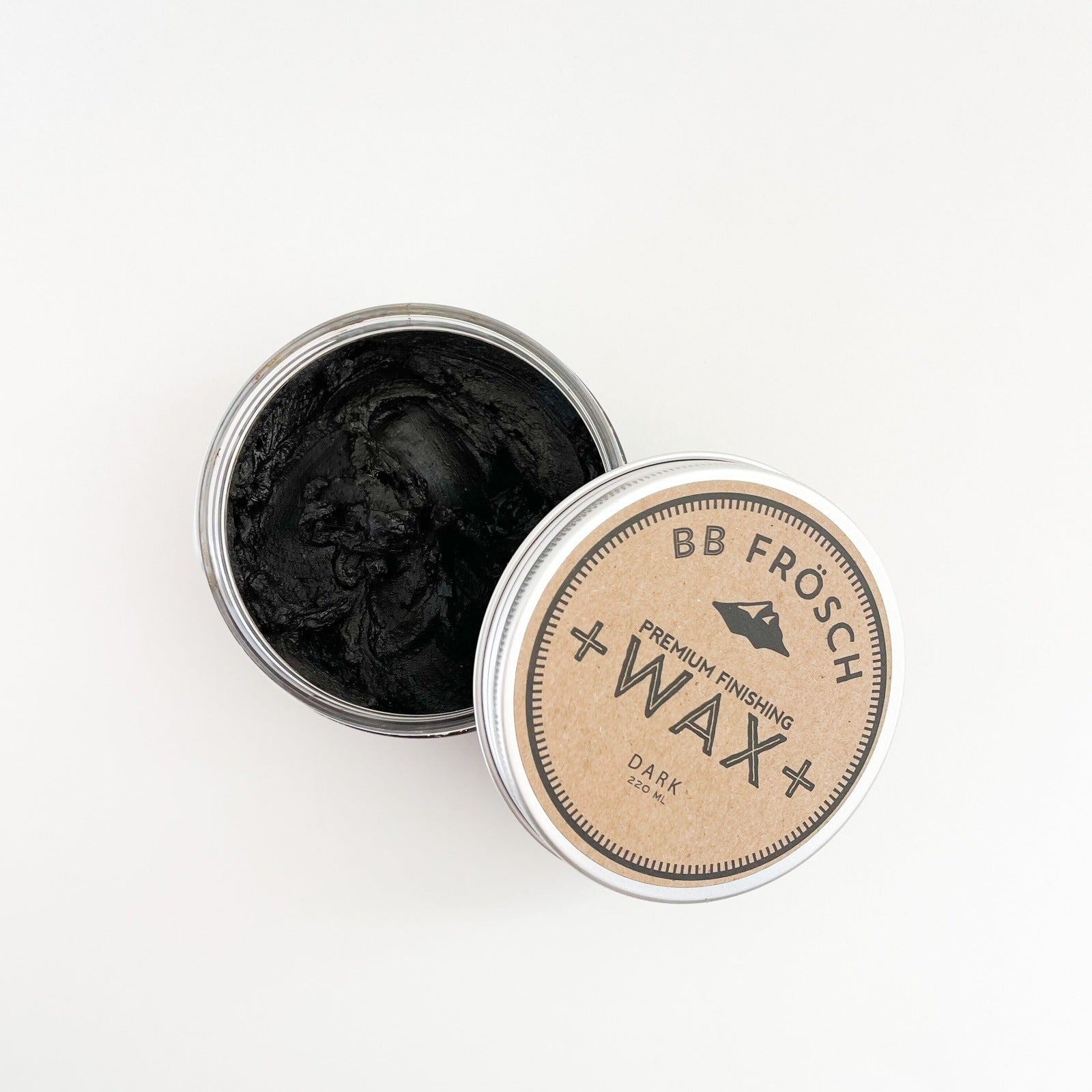
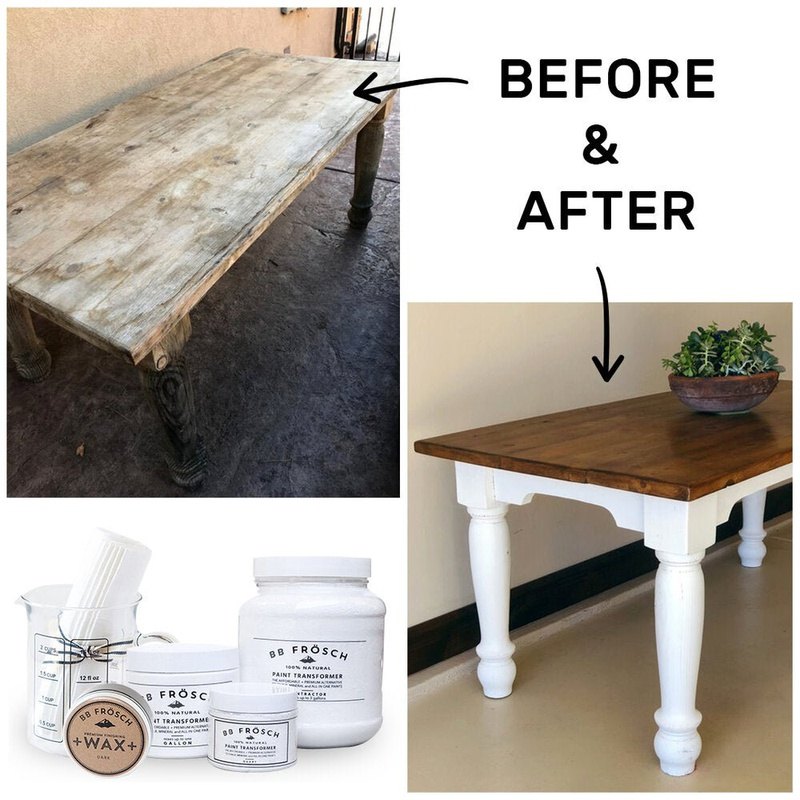
Dark adds depth. On bare wood it deepens and nourishes the grain, which is how you get a rich brown wood top over a painted base or panels that glow against a painted exterior. On painted surfaces it settles into carved details, corners, and edges.
Doing a two-tone piece? You'll want both. Clear for the painted parts, dark for the wood.
Which Size?
220 ml covers a typical furniture project. Good for a dresser, a table, or a set of chairs.
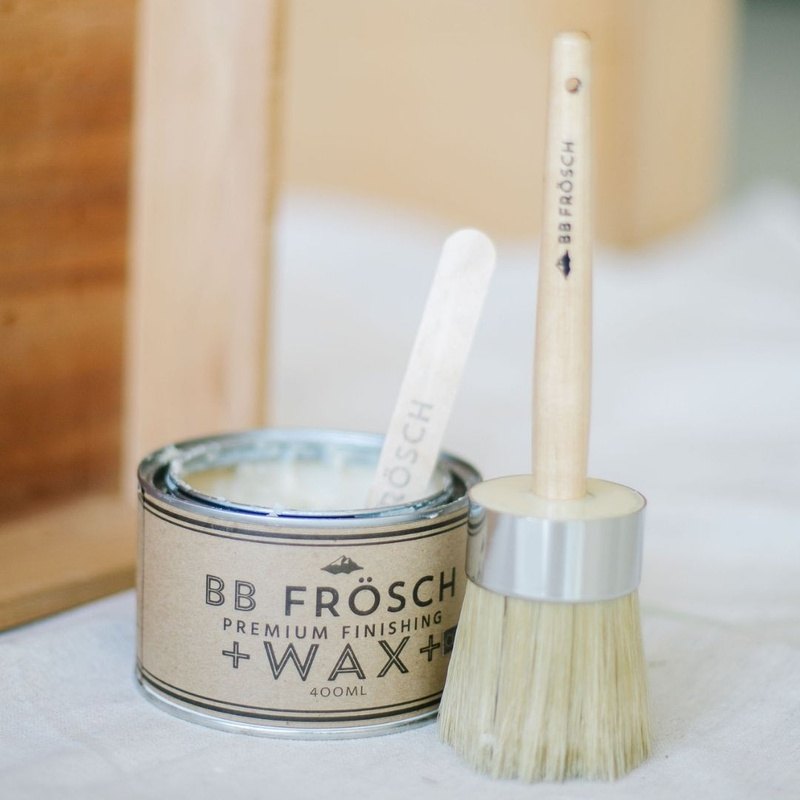
400 ml is for cabinets, larger pieces, or anyone waxing regularly. The practical choice if wax is something you reach for often.
How to Apply
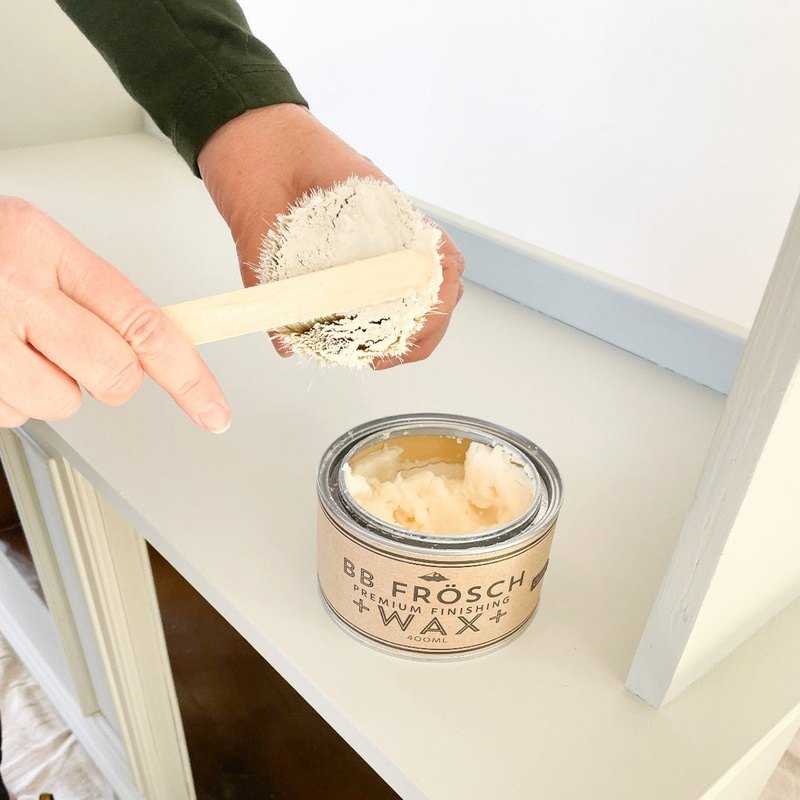
- Butter your brush. A thin layer of wax on the end of the bristles. Try not to dip the brush in the jar.
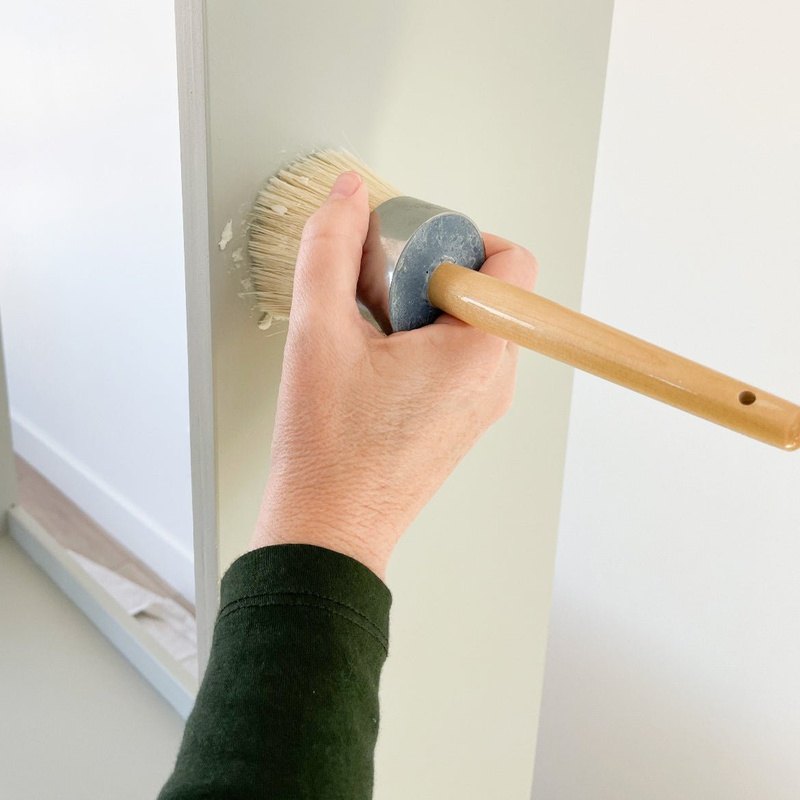
- Wax on. Work a small area at a time, about a square foot. With the grain, in circles on carved or detailed areas.
- Wax off. When the wax is off your brush and onto the piece, wipe the excess with a lint-free cloth before reloading. You'll know it's right when the cloth glides, the surface isn't tacky, and it starts to shine.
- Repeat, then buff. Work your way around the piece, then buff to the sheen you want. The more you buff the more sheen there will be.
Wax on, wax off, then move to the next section. Don't wax the whole piece and come back to it. The wax cures in minutes. Waxing in smaller sections makes it more manageable.
A note on the smell: you'll notice a mild solvent scent when you first open the jar and while you're applying. It fades quickly as the wax dries. Work in a ventilated space if you're sensitive to it.
If You Get Wax Dust or Pilling
This is the most common wax problem and it has one cause: too much wax on the brush.
BB Frösch wax dries fast, which is wonderful on your furniture and less wonderful in your bristles. If excess wax dries before you wipe it off, you get dust or little pills.
Use less, work smaller. If one brush load covers much more than a square foot, you're using too much.
If the Wax Feels Firm
If you prefer your wax to be more of a liquid, set the jar in a warm window for a few minutes, or scoop a small amount into a microwave-safe dish and warm it in five-second intervals, stirring between each. Let it cool before applying.
What Else You'll Need
A wax brush and lint-free cloths. A wax wand makes buttering the brush easier and keeps excess out of your bristles, which is what prevents the dust in the first place.
Shop the Starter Kit → everything in one box
Wax on. Wax off. Piece finished.

